


How Solar System Works: Solar Panel, Solar Energy, and the Power Behind Modern Solar Systems
Solar energy has rapidly emerged as one of the most reliable and sustainable clean energy solutions across the globe. As electricity costs continue to rise and environmental concerns grow, more homeowners and businesses are turning toward solar power as a long-term energy alternative. Understanding how solar system works is the first and most important step in making an informed decision about adopting solar energy for residential, commercial, or industrial use.
This detailed guide explains the fundamentals of solar energy in a simple yet comprehensive manner. It breaks down how a solar panel captures sunlight using photovoltaic cells and converts it into electrical energy. The article also explains how multiple solar panels work together as a complete solar energy system, supported by key components such as inverters, meters, and electrical panels. By clearly explaining how sunlight is transformed into usable electricity, readers gain a practical understanding of how solar power fits into everyday energy consumption.
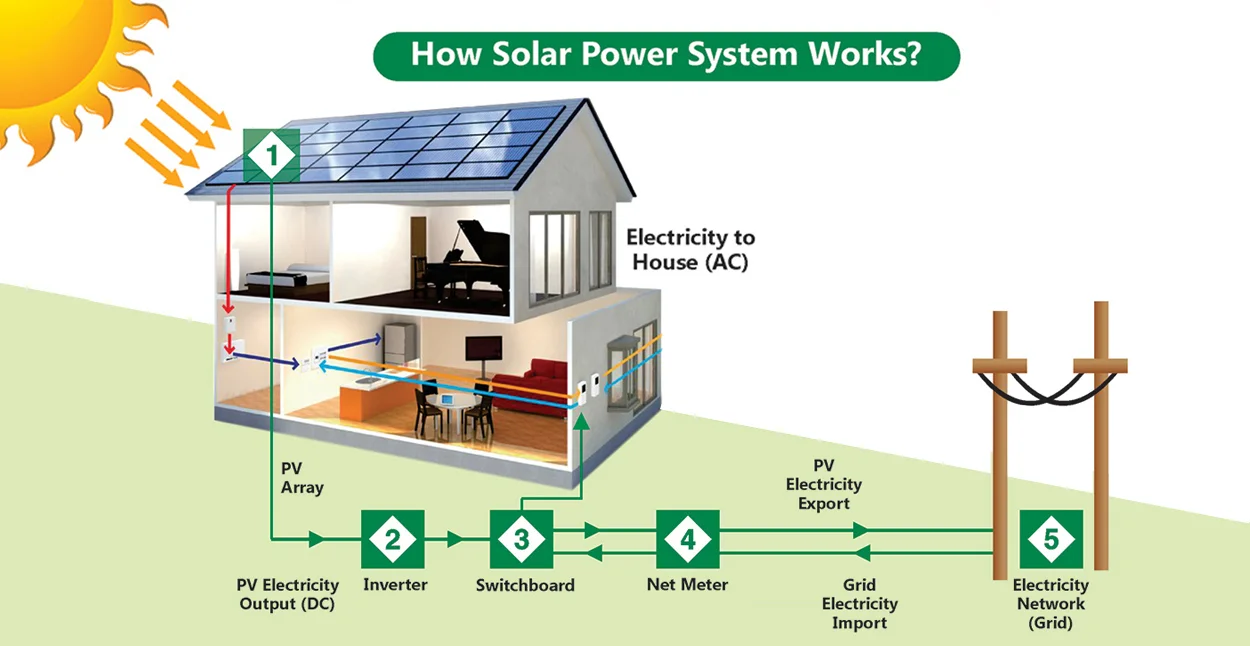
How a Solar System Works:
Sunlight Hits Panels: Solar panels on your roof (or elsewhere) absorb sunlight.
DC Electricity Created: The sunlight excites electrons in the panel’s silicon, generating direct current (DC) electricity.
Inverter Converts to AC: An inverter changes the DC electricity into alternating current (AC) electricity, which is what your home or business uses.
Powers Your Building: The AC electricity flows into your electrical panel and powers your lights, appliances, and other devices.
Excess Power to the Grid (Optional): If your solar system produces more electricity than you need, the excess can be sent back to the utility grid, and you may receive credit for it (net metering).
Key Components:
Solar Panels: Capture sunlight and convert it to DC electricity.
Inverter: Converts DC electricity to AC electricity.
Mounting System: Securely attaches panels to your roof or ground.
Electrical Panel: Distributes electricity throughout your building.
Net Meter (Optional): Measures electricity sent to and received from the grid.
In essence, solar panels capture sunlight, convert it into usable electricity, and allow you to power your home or business with clean, renewable energy.
Benefits of Understanding How Solar System Works
- Reduces electricity bills by up to 90%
- Uses clean and renewable energy
- Low maintenance and long lifespan
- Eligible for government subsidy (on-grid)
- Increases property value
- Environment-friendly solution
Types of Solar Power Systems
Understanding system types helps clarify how solar system works in different situations:
On-Grid Solar System – Connected to grid, subsidy eligible, no battery
Off-Grid Solar System – Independent system with battery backup
Hybrid Solar System – Grid-connected with battery storage
Monitoring & Performance Tracking
Modern solar systems come with monitoring software that allows users to track daily power generation, energy usage, and savings through mobile apps or web portals. This transparency helps users understand system performance and efficiency.