Does Size Really Matter in Solar Panels? Yes — Here’s Why

Why does size matter in solar panels?
Everything from the watts to how simple it is to lift a module onto a roof is influenced by the size of the solar panel. The following information helps you select a size that really fits by weighing the benefits and drawbacks of large versus compact panels.
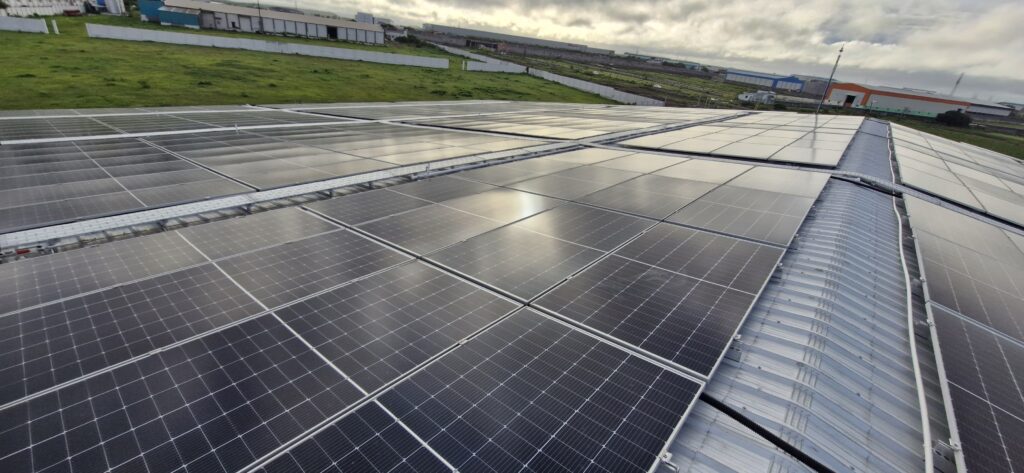
The most important factor in any installation is the size of the solar panels. The number of solar cells a panel contains is determined by its standard size (physical dimensions), which also influences the power output of the panel. On any solar panel size chart, large commercial solar modules outperform smaller portable models because they contain more cells. According to the Ministry of New and Renewable Energy (MNRE), rooftops function best when high wattage and ease of handling are combined, which is crucial for city layouts.
However, there are trade-offs associated with larger sizes. Large panels, such as those found in commercial installations, can be more difficult to install because they are heavier and require more roof space. Though they produce less power, smaller panels can fit around skylights and vents. Larger panels require wider racks and transportation, but they reduce the size of solar panels per kW in a system. In addition to power, solar panel size is important for mounting and transportation. Finding the ideal balance between a panel size that satisfies your energy requirements and fits comfortably on your roof or site is crucial.
Find the perfect fit and power with this solar panel size chart
This chart compares solar panel dimensions to their power output. These examples include the latest P-type Mono PERC panels and N-type TOPCon panels, which are advanced technologies used by leading manufacturers like Tata Power Solar:
| Technology | Wattage range | Solar panel dimensions |
| P-Mono Perc | 550W – 555W | 2278 × 1134 mm |
| 580W – 600W | 2456 × 1134 mm | |
| 500W – 555W | 2278 × 1134 mm | |
| 555W – 600W | 2456 × 1134 mm | |
| n-TopCon | 570 W–590 W | 2278 × 1134 mm |
| 590 W–620 W | 2456 × 1134 mm | |
| 590 W–630 W | 2384 × 1134 mm |
Today, improved Mono PERC cell technology packs around 550 W into roughly the same 2.28 × 1.13 m frame. And with cutting-edge N-type TOPCon cells, leading Indian manufacturers can push near 580 W from that same size panel. To get even more power, some solar panels have become slightly larger (about 2.456 m tall for 156 half-cell formats) to reach 600 W or more.
This helps you visualize how higher-wattage modules often require slightly larger footprints. Choosing the right panel for your space can boost overall system efficiency and reduce installation complexity. In summary, the solar panel size vs output trend is clear: efficiency improvements allow for higher wattage without a proportional increase in panel area.
How much do solar panels weigh?
ost Indian rooftops can easily carry today’s solar panels. MNRE’s Best-Practices Guide for rooftop programmes notes that a complete PV array including panels and mounting should weigh no more than about 30 kg per square meter of roof area.
For the solar panels themselves, this works out to rough module weights of 18–20 kg for a standard 60-cell (≈1.6 m × 1 m) panel and 22–25 kg for a larger 72-cell (≈2 m × 1 m) unit. These figures keep crews comfortable during installation and stay well below the roof-load limits set in Indian building codes, so most homes and offices can adopt solar without structural worries.
MNRE’s best practices guide for solar panels
1. 30 kg per m² is the design ceiling
2. All terraces are designed to take the weight of the PV systems
3. Size your rooftop PV system: 10–15 m² of roof per kW
4. Use lightweight, corrosion-resistant structures
Residential vs commercial solar panels
Homes prize flexibility and look; factories chase raw output and low rupee per watt. We compare dimensions, wiring, and payback so you can pick panels that truly suit your address.
Residential solar panels.
Residential solar panels come in a compact size with about 60 cells or 120 half-cells per module. At roughly 1.6 to 1.7 meters tall and one meter wide, these panels are simple to lift and place on rooftops. They generate 300 to 400 watts each, ideal for most homes. Their smaller footprint makes it easier to fit panels around chimneys, vents, and skylights, offering flexible layout options on any roof.
Commercial solar panels.
Commercial solar panels usually feature 72 cells or 144 half cells and measure around 2 to 2.1 meters by 1.0 to 1.1 meters. They deliver 450 to 600 watts per panel, making them ideal for large flat roofs on factories, warehouses, or ground mounted farms. With each panel about 30 percent larger than residential modules, fewer panels are needed for high-capacity systems, to simplify wiring and mounting on projects.
| Feature | Residential solar panels | Commercial solar panels |
| Overall size | Each module stands roughly 1.6–1.7 m high and about 1 m wide. | Each module measures around 2 m long and a little over 1 m wide. |
| Cell count | A module packs 60 full cells (or 120 split cells) in its frame. | A module packs 72 full cells (or 144 split cells) in its frame. |
| Output per module | 300–400 watts of electricity. | 450–600 watts of electricity. |
| Handling on site | Light enough for two people to carry and can nestle between roof features such as chimneys or vents. | Bigger and heavier, but you need fewer modules to reach high system power, cutting down touchpoints. |
| Ideal mounting surface | Works best on sloped/flat residential roofs. | Suited for wide, flat industrial roofs or on-ground racks. |
From a policy view, MNRE’s Virtual Net‑Metering rules cap rooftop systems in group housing up to 500 kW, so residential societies often split arrays between towers. Knowing panel footprints helps allocate that quota fairly. When neighbors ask what size solar panel do I need, remind them power goals, roof shape, and walk‑space all steer the answer. In India, both residential and commercial segments often use similar technologies (monocrystalline PERC, etc.), but just scaled differently in size.