Short-Term Vendors, Long-Term Risks — A Reality Check for Solar Buyers

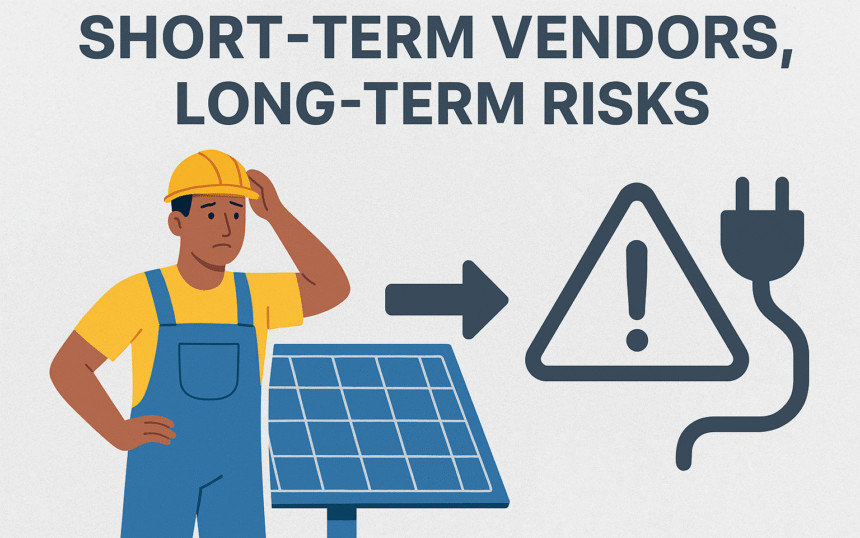
The PM Surya Ghar: Muft Bijli Yojana is an ambitious initiative to bring rooftop solar to millions of households across India. By making solar more accessible and affordable, the scheme has significantly accelerated rooftop adoption. However, rapid expansion has also sparked a worrying trend — the mushrooming of unqualified and temporary solar vendors.
⚡ A Boom in “Solar Vendors” — But at What Cost?
With simplified registration processes, a wide range of players — from cable TV operators and interior designers to electricians and water suppliers — are entering the solar market. While inclusivity is positive, many of these new vendors lack the technical knowledge, experience, and long-term commitment needed to support rooftop solar systems over their 20–25 year lifecycle.
🧾 Why This Is a Problem
Rooftop solar is a long-term investment. A properly functioning system requires:
- Correct system design and sizing
- Quality components and certified installation
- Reliable after‑sales service and maintenance
- Clear warranty handling and documentation
Temporary or inexperienced vendors may cut corners on design, use lower‑quality components, or disappear once incentives stop — all of which risks poor performance and safety concerns.
🚨 The Post-2027 Risk
Many of these scheme-generated vendors rely on the PM Surya Ghar framework for business. With the scheme expected to wind down by March 2027, there’s a real danger that these temporary vendors will exit the market, leaving consumers without support when systems fail or warranties expire.
🌞 Building a Sustainable Solar Ecosystem
To protect consumers and the industry reputation, stakeholders must focus on:
- Stricter vendor qualification and registration standards
- Consumer education on choosing reliable EPCs and installers
- Stronger after-sales service and warranty enforcement
- Incentives for established players to continue long-term engagement
🏡 Advice for Consumers
When considering rooftop solar under the scheme, always:
- Verify vendor credentials and track record
- Request documented warranties and service commitments
- Prefer vendors with local service teams and clear references
- Get multiple quotes and compare technical proposals
Conclusion: The PM Surya Ghar scheme is transformative for India’s renewable goals, but unchecked vendor expansion risks undermining long-term trust in rooftop solar. With better regulation, consumer awareness, and a focus on quality, India can ensure the rapid rollout is matched by reliability and sustainabilit